


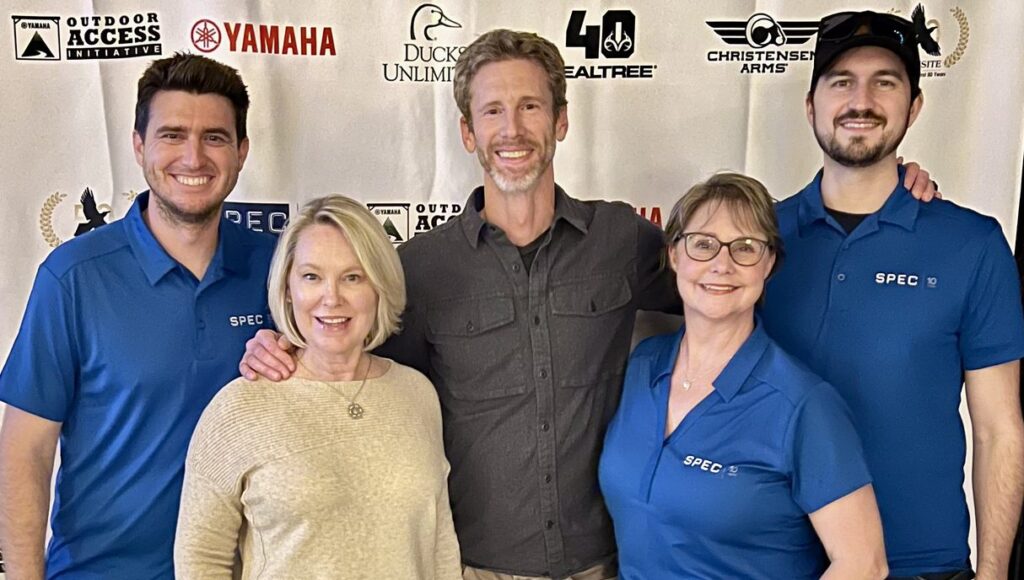
I’m back in Georgia while I write this intro. I was born in Georgia, and I have family in Georgia, but these days it’s usually meetings at Yamaha that bring me back. And each time I’m here, I’m reminded how special this journey has been … ten years of SPEC, twice that with friends at Yamaha, and even longer working with my SPEC partner, Lisa.
As Bear Grylls said on one of my favorite YouTube shows, “Life’s a great privilege.” (If you don’t know Hot Ones, it’s worth a look, and you can start with Season 18, Episode 10, “Bear Grylls Battles For Survival Against Spicy Wings”).
We’ve had a fast start to 2026, from hosting Yamaha’s WR125R press rides, to AIMExpo, our annual SHOT Show media reception, and King of the Hammers. As we like to say, this ain’t no desk job.
Through the hustle, what hits home for me are the relationships we’ve been fortunate to build over the decades. The colleagues, clients, media, partners, and other friends we see along the way that make the work matter. Year after year, season after season. Time has a way of transforming “networking” into “catching up,” “media relations” into “reaching out to friends,” or “hosting receptions” into “organizing reunions.”
Our industry is always evolving, and while the tactics and trends may change (as illustrated by Tyler’s latest Insight below), one constant will be the great people and relationships we’ve built along the way. (Nod to the editor friend who reminded me of this at SHOT.)
If you’re on this list you likely fall into one of those categories. Friend or friendly association, we appreciate the opportunity to spend time with you on a ride, a hike, in camp, on a hunt, or even just at a dart bar in Vegas.
We hope you find some value in the information below, and we hope to see you all again somewhere (outside) again soon.
Van
Founding Partner, SPEC PR
Strategic, Pragmatic, Effective Communications
SPEC Insights
The Guardian published an article last year claiming the number of Americans who read daily for pleasure has been (to the surprise of no one) on a decline. About 3% per year, from more than a quarter of Americans in 2003, down to only 16% in 2023, when the study was conducted. If there’s direct blame for the decline of reading, it’s online video. Video now accounts for 82% of internet traffic and YouTube is the second largest search engine in the world.
In my first few years in PR we clearly differentiated between “Journalists” and “YouTubers” only to see the lines blur as YouTubers began putting out content that rivaled TV programming, and journalists started becoming YouTubers themselves. I often still see YouTube categorized on PR tools and industry reports as “Social Media” alongside Facebook, Instagram, TikTok and Xwitter, but in reality the presentation and format of long-form deep dive content on YouTube is often much closer to “traditional media” of Print, Web, TV and Radio than the fleeting, ephemeral posts of Social Media. You can look at any list of the highest performing categories on YouTube, and you’ll see many of the same themes:
- Education and Tutorials (How-tos)
- Product Reviews and Unboxings
- Lifestyle and Vlogs
Speaking of new media platforms that can arguably be categorized as traditional media, 55% of Americans are listening to podcasts monthly. They’re considered to have been a key influence of the 2024 presidential election. The podcast king, Joe Rogan, has compared the platform to the UFC Arena, where people can hash out ideas and opinions in long-form conversations too complex for the limited time slots of TV programming. Podcasts have taken over the role traditionally reserved for op-eds in shaping public perception. If you’re in the business of influencing opinion, you should consider Podcasting as another way to reach your audience.
According to the Interactive Advertising Bureau podcasting ballooned from an $80 million industry in 2014 to a $2.4 Billion industry in 2024, and it’s expected to grow to $130 Billion by 2030. Spotify, one of the largest podcast platforms in the world, invested more than $100 million in podcasts in the first quarter of 2025 alone and has been steadily investing in their video hosting capabilities since 2020 to combat YouTube’s dominance in the space.
You may think of Podcasts as a convenient audio-first experience to get information when you’re on the go or playing in the background while you work. The reality is, video’s influence has also been taking over this space. According to DemandSage:
- Over 50% of podcast shows are now posting full video episodes on YouTube, a 130% increase compared to 2022.
- YouTube is the most popular platform for podcast consumption overall (33% share).
- 71% of video podcast consumers describe it as a richer experience.
- 44% of viewers say they are more likely to trust a content creator they can see on video, compared to 25% of audio-only listeners.
While YouTube and Podcasting have exploded to the forefront of digital media, this is not meant to be a warning to writers to get out of the game. The landscape has without a doubt shifted to more A/V-centric mediums, but there is still a ton of value in written content. It’s one of the strongest ways to generate SEO traffic, it’s easier for consumers to research and find specific information they’re looking for, and as traffic-consuming as AI has been, written content is its greatest source of data and influence.
There is demand for content across all mediums, each effective at reaching different audiences who consume media in the way that’s best for them. Diversifying across these mediums, and repurposing that content for social, can help you capture more of their attention from the long-form listeners to short-form scrollers.
Tyler
SPEC PR
Strategic, Pragmatic, Effective Communications
Something to Think About
A friend much smarter than I once shared that he watched consumer sentiment reports closely to guide predictions and projections for how and when people might spend their money.
SGB Media recently summarized key findings from University of Michigan’s monthly survey.
Spoiler alert, two points that jumped out at us:
- “higher-income households are doing well while lower-income consumers are struggling“
- Joanne Hsu, director of Surveys of Consumers, at the University of Michigan, stated: “U.S. consumer sentiment improved across the board in January against the prior month but remained well below year-ago levels as concerns about high prices and the labor market lingered …”
From a communications perspective, could this impact your messages, tactics, or channels? We might consider this a call to push more premium messaging and/or promotions on the lower end.
Van
Founding Partner, SPEC PR
Strategic, Pragmatic, Effective Communications
Client Spotlight
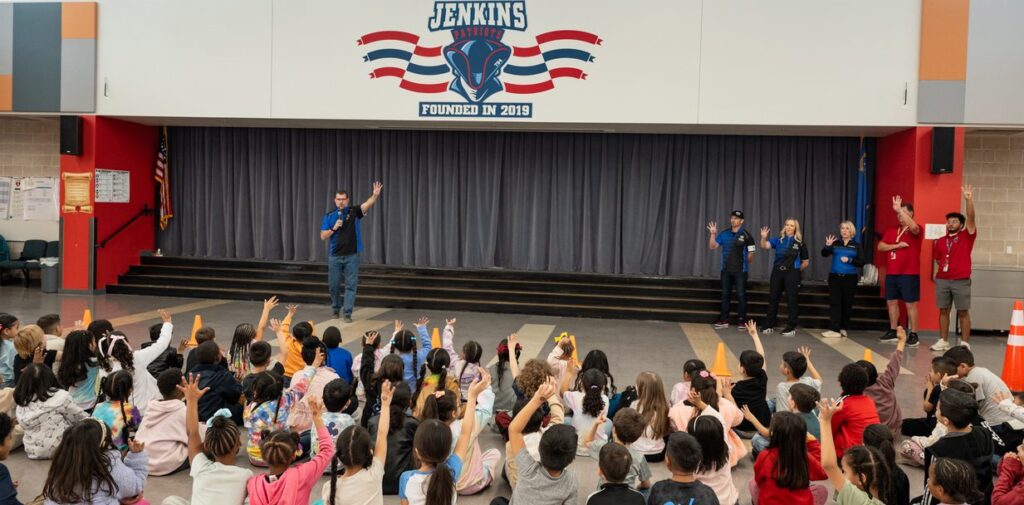
The Yamaha Outdoor Access Initiative (OAI) is one of those programs that does a lot of good without always making noise about it. At its core, OAI exists to promote safe, responsible off-highway vehicle use and to protect sustainable access to public lands. But in practice, it also creates opportunities to invest directly in local communities in ways that feel immediate and personal.
One of the most tangible examples is Yamaha’s continued support of the All Kids Bike Kindergarten PE Learn-to-Ride Program. Since 2018, All Kids Bike’s mission has been simple and powerful: give every child in America the opportunity to learn how to ride a bike in school. Through OAI, Yamaha helps fund equipment donations to kindergarten physical education programs across the country, providing complete learn-to-ride kits that are built to last for years of future classes.
Most recently, we joined Yamaha to present an All Kids Bike Program to Earl N. Jenkins Elementary School in Las Vegas, underscoring how wide Yamaha’s outdoor ecosystem really is and how access, education, and community can work together. We have seen this same community-building effect elsewhere too, including our previous OAI story at Perris Raceway, where Yamaha highlighted how grant funding can strengthen local riding facilities and the community it serves, leading to greater access to outdoor recreation.
Tyler
SPEC PR
Strategic, Pragmatic, Effective Communications
Something We Believe In
When I was an active skier, dropping into a challenging run to the opening riff of the Beastie Boys’ “Sabotage” in my headphones helped me commit to more aggressive lines. Music synchronizes movement, amplifies the flow state, and turns a good run into an unforgettable one. It made me feel invincible.
Now picture this: you’re on that same mountain, but this time you pause mid-descent in the silence. You hear wind moving through the trees, the particular sound snow makes under your skis at this temperature, and your own controlled breathing. You notice things you would have missed.
Both experiences are valid. Both are “authentic.” But they’re fundamentally different, and understanding that difference might help us think more intentionally about when and how we bring music into wild places.
The case for music in outdoor recreation is compelling. The right soundtrack can enhance flow states during rhythmic activities like trail running, mountain biking, or skiing. Music can reduce the feeling of exertion, quiet anxious thoughts, and make solo adventures feel less isolating. For many people, music is the gateway that makes outdoor recreation more accessible and enjoyable.
But the counterargument isn’t just about preserving some idealized “pure” wilderness experience. Natural soundscapes provide real-time feedback about our environment and our physical state. They help us hear approaching weather, detect wildlife, and maintain situational awareness. Research suggests that exposure to natural sound patterns may offer restorative benefits. In a world saturated with human-created noise, wild places serve as valuable acoustic refuges.
The interesting middle ground might be context-dependent. High-output activities with strong rhythm and momentum like skiing steep terrain or crushing a technical mountain bike descent, might genuinely benefit from music that matches that energy. Meanwhile, wildlife watching, sunrise hikes, or paddling calm water might be exactly when we need to put the earbuds away.
Some musicians seem to understand this tension intuitively. Artists like Jeff Tweedy of Wilco, who was recently featured on CBS Sunday Morning, create spare, contemplative music that layers with the outdoors rather than competing against it—the musical equivalent of leaving no trace. I love the idea of an evening campfire listening to Misunderstood.
The question isn’t whether music belongs in nature, but rather: what are we trying to access in this particular moment? Sometimes that’s the exhilaration of perfect synchronization between body, landscape, and beat. Sometimes it’s the particular quality of attention that comes only when we’re fully present to the sounds a place makes on its own terms.
Both have value. The key is knowing which experience we’re choosing, and why. What’s in your playlist?
Lisa
Founding Partner, SPEC PR
Strategic, Pragmatic, Effective Communications