The SPEC Sheet: “Treat Everything Like It’s Your First Project”
October 19, 2026
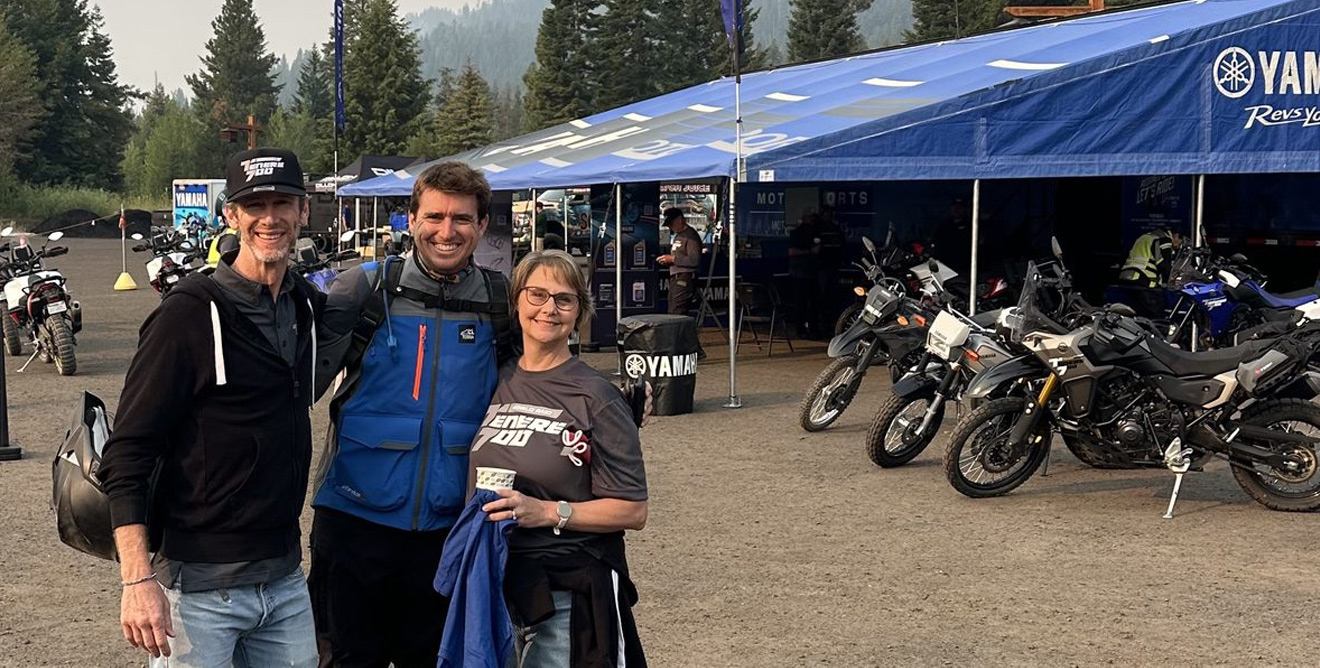
Anything I’ve done well in my career, I owe in large part to the people who mentored me, taught me, coached me, and gave me an opportunity to observe what it takes to do good work.
(I consider myself lucky that many of you are still in my life and receiving this email. You know who you are. Thank you.)
Among my list of many mantras: Don’t be the smartest person in the room. (Easy for me.) Learn from those who came before you. (Harder.) Be great at the fundamentals. (Most challenging.)
That last one jumped out at me again when re-listening to a Founders Podcast on Jay-Z’s autobiography. Among the many lessons, there’s a short segment on how a young Shawn Carter studied the great artists before him. While the masses focused on the flash, Jay-Z studied breath work, wordplay, and story development.
It also reminded me of the Biggie quote that Jay-Z uses to open one of his songs: “Treat everything like it’s your first project.”
For me, that speaks to keeping things fresh, new, and not taking anything for granted. But it also speaks to a focus on fundamentals.
In our business, fundamentals include being a good writer, presenter, and storyteller. Being creative, but also detail-oriented. Constantly studying media. Reading, watching, listening.
Some of these take practice. Many take talent. But others come from observing and absorbing the people around you, knowing great work when you see it, internalizing it, applying key learnings to your own work.
After a couple of decades playing PR guy, it’s easy to get comfortable with experience. To assume experience matches expertise and to forget to look for new opportunities. We’re in a creative industry, and that requires us to see around corners. Find new trends. Make connections that aren’t obvious.
I believe this is especially important in our enthusiast-based industries, where it’s easy to get tunnel vision. Casey speaks to this in our Insight below. Tyler shares an interesting example from Wendy’s.
Dig in and be an expert in your niche, but from time to time, open up your aperture and look at the bigger picture. You might find new connections, new opportunities, new ideas. Then apply those fundamentals to create great new work.
Van
Founding Partner, SPEC PR
Strategic, Pragmatic, Effective Communications
SPEC Insights
The U.S. powersports retail market is worth $48.2 billion, according to the Motorcycle Industry Council’s (MIC) latest Economic Impact Report. Behind that number: an estimated 1.1 million new powersports retail sales, 10,632 retailers, 112,221 dealership employees and $5.6 billion in dealership payroll.
History has shown that if you dig beneath the numbers, the powersports industry is defined by more than just the revenue it generates. It’s a significant part of the outdoor recreation industry and American culture. Our work across powersports and outdoor recreation gives us unique insight into the people, businesses and communities that make up the industry, and MIC’s data confirms what we see every day – the industry’s impact reaches far beyond the dealership.
Riders spend money on vehicles, parts, accessories and apparel, but they also travel to riding destinations, stay at hotels and campgrounds, eat at local restaurants, purchase fuel and visit businesses in communities surrounding recreational areas. They buy cameras and electronics, communication systems, coolers, trailers, camping equipment, tools and other products that support their time outdoors.
Backcountry Discovery Routes (BDR) illustrates how all of this comes together. The organization provides thorough routes to inspire veteran explorers and attract new riders. I spent a week with the BDR team on a recent filming expedition, and saw how a single route can impact dozens of brands and businesses. The hotel rooms, camp sites, food, fuel and even the keepsakes we buy all contribute to the greater economy.
That connection becomes even more meaningful when viewed against the size of the overall outdoor recreation economy. According to the U.S. Bureau of Economic Analysis, outdoor recreation generated $696.7 billion in value added to the U.S. economy in 2024. The sector encompasses an enormous ecosystem of businesses and experiences from recreation and tourism to manufacturing, retail, transportation, lodging and food services.
For brands, this broader view of the powersports market raises an important question: What are your customers doing, buying and experiencing beyond the products you’re marketing to them? The powersports enthusiast who buys an ATV may also be an avid camper, overlander, hunter or traveler and those interests create opportunities for brands to connect with consumers in new and relevant ways.
Understanding a core industry is one thing, but understanding the expanse and potential of an industry is another thing entirely.
When we look into how these connections can inform PR and experiential marketing initiatives, it opens the door to initiate meaningful storytelling, strategic partnerships and brand experiences, both digitally and in real life, that connect with consumers through the activities and communities they care about most. Media professionals often tap into these activities and communities, but they could do it more, especially in the age of a dramatically shifting media landscape.
We see the powersports industry as part of a much larger consumer ecosystem, and tapping into related industries is not a fresh new idea, but it is an important reminder that this type of intentionality is important.
Casey
Marketing Communications and Experiential Manager, SPEC PR
Strategic, Pragmatic, Effective Communications
Something to Think About
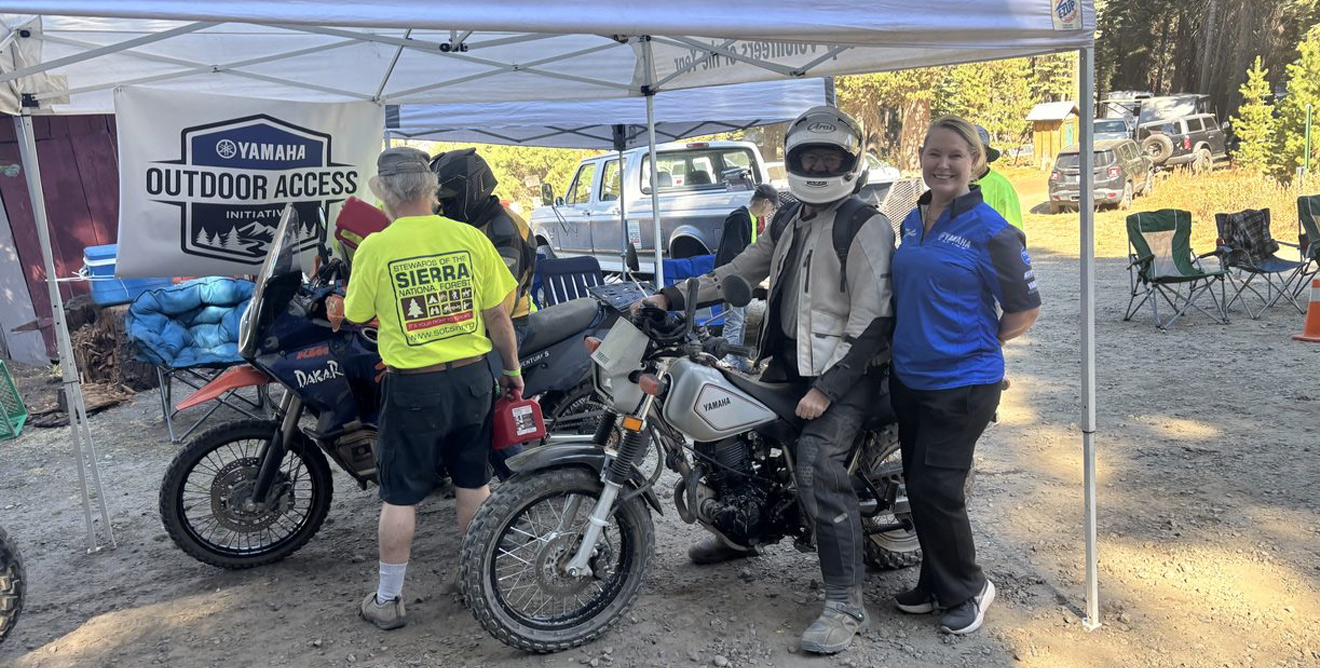
A couple of weeks ago I had the pleasure of being the keynote speaker at the annual meeting of the Stewards of the Sierras, a small, scrappy group of hard-working seniors dedicating hours every week to ensuring trails are cleared so folks can ride. Part of the weekend was spent hosting a ride through the Sierra National Forest, and I was asked to help staff the refueling station at the top end of the 80+ mile route. Two men in their nineties, both active trail-working members of the Stewards of the Sierras, showed me the ropes on how to assist the riders coming in for fuel for the bikes and bodies and grinned at my willingness to get my hands dirty.
It was a fun time, but the experience underscored an important reality about this industry. In addition to raising the next generation of riders, we are sorely in need of modeling the value of stewardship among younger generations. The median age of this group was well north of 70 — you can learn more about them in this episode of PBS’ American Grown — the youngest member was in their 50s. The work is hard and endless as the Sierras grapple with tree fall related to fires and disease.
I’ve enjoyed taking my family to the Yamaha employee volunteer trail-working events on the USFS San Bernardino since my kids were in elementary school. I love that they remain willing and available for public land conservation work as young adults. After my time with Stewards of the Sierras, I realized my family’s experience isn’t universal.
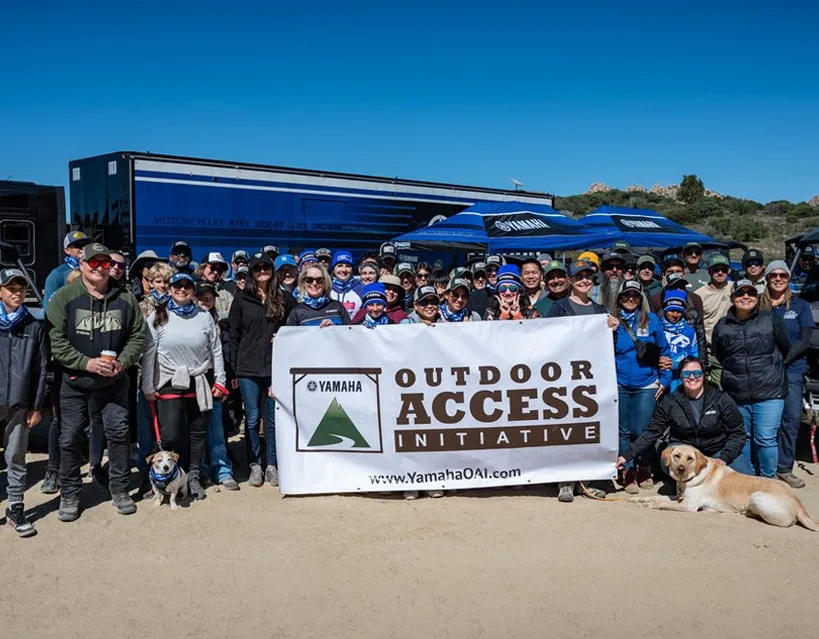
Serving as the program manager for the Yamaha Outdoor Access Initiative provides a front-row seat to the issues of access to public land for outdoor recreation. My experience with the Stewards of the Sierras surfaced a challenge to access I hadn’t considered: if we don’t explain the obligation of land ownership to our kids, we will lose the opportunity to enjoy the land. So, if your life in the outdoors includes public lands, please find ways to contribute to their care … and take a kid with you.
Lisa
Founding Partner, SPEC PR
Strategic, Pragmatic, Effective Communications
Media Spotlight
Looking for more insight into the Powersports Industry?
Our longtime friend Dave McMahon, former Editor-in-Chief of Powersports Business and Executive Director of the National Powersports Dealer Association, has launched a new dealer-focused digital media platform, Powersports Dealer Showcase.
In addition to being a longtime (unconditional) Razorback fan, Dave keeps his finger on the pulse of the powersports industry and the dealers who connect brands to their customers.
Check him out, and Go Hogs!
Van
Founding Partner, SPEC PR
Strategic, Pragmatic, Effective Communications
Something to Listen To

Casey’s insight explored the idea of how brands can reach customers by looking beyond the primary industry they operate in. One extreme example that recently caught my attention was from Wendy’s. They looked beyond the fast food industry to reach an audience of millennials, like me, who grew up on pop punk & emo music of the early 2000s.
Last month, Wendy’s released their new emo album, “Songs to Listen to in a Wendy’s Parking Lot,” accompanied by a stylized Wendy’s logo reminiscent of the queen of emo, Paramore’s Hayley Williams. Instead of creating cheap AI slop and calling it a day, Wendy’s put some real effort (and money) behind the project and hired reputable talent in the industry, partnering with Rise Records and hiring Matt Squire, who produced genre-defining albums with Panic! at the Disco, All Time Low, and Simple Plan, and recording with a variety of reputable musicians across the genre.
They’re not groundbreaking hits, and the lyrics are comically on brand (“we went great together like a Frosty® goes with fries”), but the songs are catchy, they touch on different styles, and are packed with references to other bands and songs from the genre. This wasn’t something that was meant to be taken seriously (that’s kind of Wendy’s whole marketing identity), but they showed that they took their audience seriously and put in real effort to deliver something that’s authentic and respectful.
Tyler
Marketing Communications and Operations Manager, SPEC PR
Strategic, Pragmatic, Effective Communications
Pro Tip
Not a desk job!
Whether it’s a press introduction ride or a consumer activation, when SPEC PR is in the field, we work shoulder to shoulder with our clients until the job is done. The days are long and demanding — and also gratifying and energizing.
Nowhere is this more true for me than when I staff the Arthritis Foundation California Coast Classic, an 8-day bike tour from San Francisco to Los Angeles, the best and hardest week and a half on my calendar. The 2026 edition just concluded on October 3, and next year’s dates are September 11 – 18.
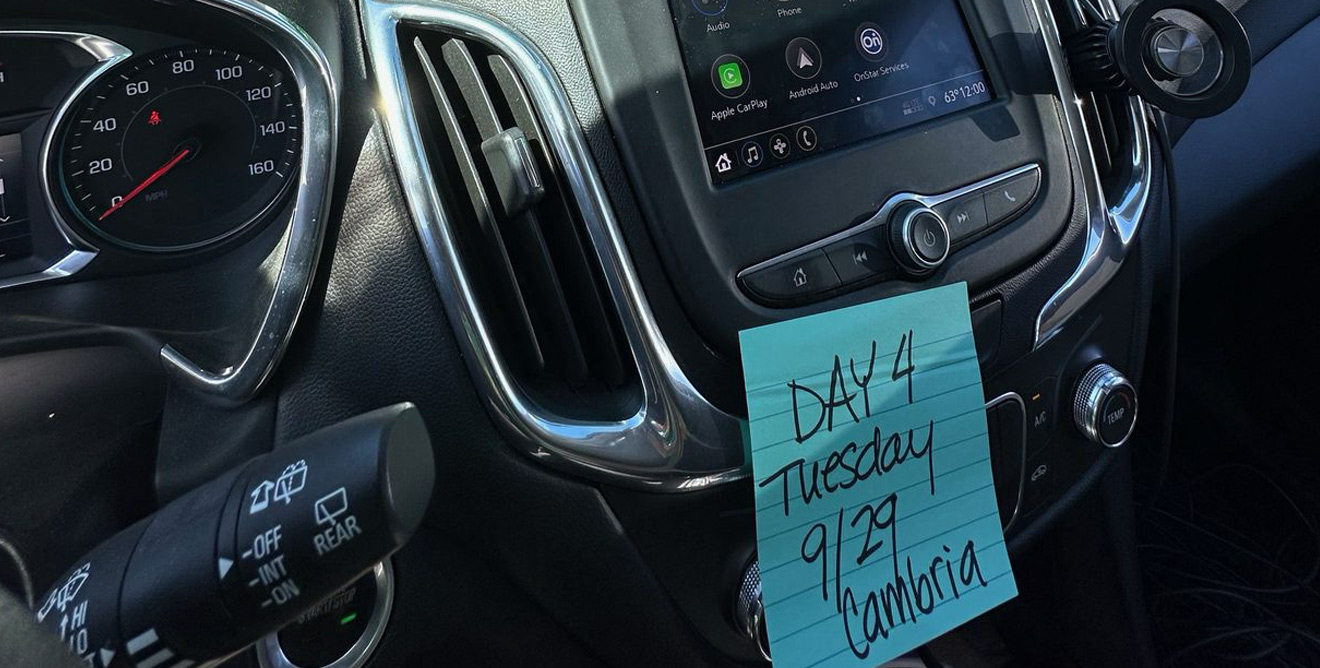
During this year’s CCC, I added some new workflows to my repertoire: a Starlink Mini on the dashboard to sync my hundreds of photos to iCloud while I drove from stop to stop down the coast, and a daily Post-It Note to literally remind me what day it was and where we were sleeping that night. You’d be surprised how grounding that was!
What are your favorite event hacks?
Julie
Lead Communicator, SPEC PR
Strategic, Pragmatic, Effective Communications